
Gemini
Artificial intelligence has quickly become part of everyday digital life. From writing and research to education, programming, image understanding, and productivity, AI tools are helping people complete tasks that once required significant time and effort. Among the many AI platforms available today, Gemini has gained attention for its ability to work with different types of information and support users across a wide range of activities.
Modern AI is no longer limited to simple question-and-answer systems. People increasingly expect AI assistants to understand natural language, analyze information, summarize content, generate ideas, and help with complex tasks. This shift has made conversational AI an important part of modern technology.
For students, professionals, developers, content creators, and everyday users, understanding how AI assistants work can help them make better use of these technologies. This guide explores Gemini, its major capabilities, practical applications, advantages, limitations, and ways people can use AI more effectively.
What Is Gemini?
Gemini is an artificial intelligence system developed by Google. It is designed to understand and work with different forms of information, allowing users to interact with AI through natural language.
Unlike traditional software that usually requires specific commands, modern AI assistants can understand conversational instructions. A user can describe a task in ordinary language, ask a question, request an explanation, or provide information for analysis.
This makes AI more accessible to people who may not have technical knowledge.
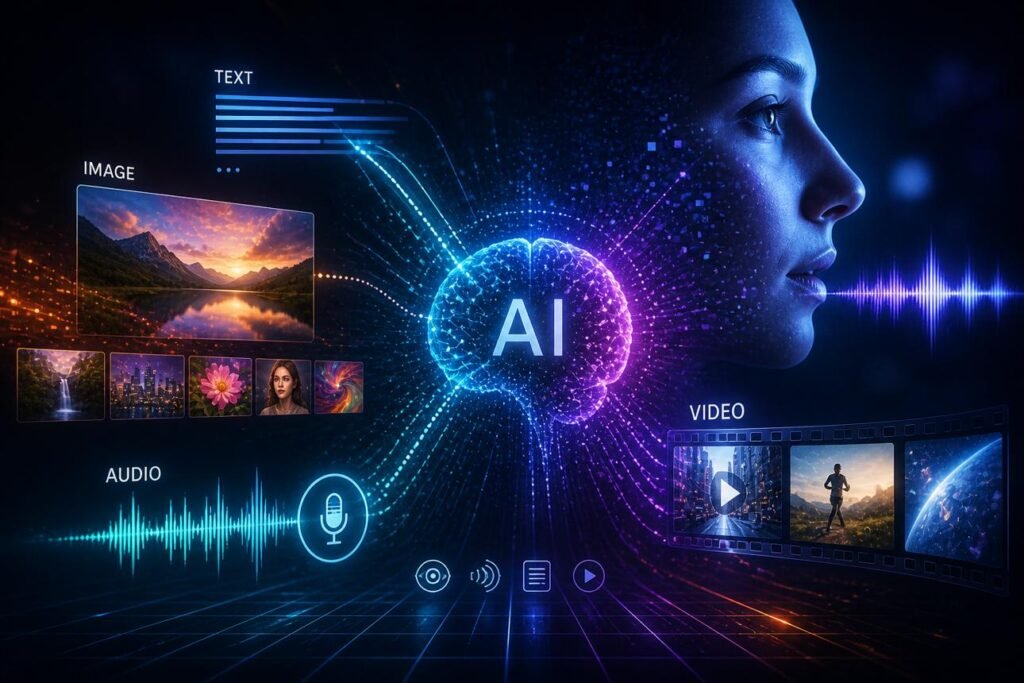
One of the important ideas behind Gemini is multimodal AI. Instead of focusing only on text, multimodal systems are designed to work with multiple types of information. Depending on the available version and features, these capabilities can include text, images, audio, video, and code.
The technology is therefore useful in situations where information comes from different sources rather than from written text alone.
How AI Assistants Work
Understanding the basic concept behind AI can make these tools easier to use.
AI models are trained using very large amounts of data. During training, the system learns patterns in language and other forms of information. When a user provides a prompt, the model processes the request and generates a response based on the patterns and information it has learned.
This does not mean that an AI system thinks exactly like a human. Instead, it uses complex computational methods to predict and generate useful responses.
The quality of an AI response can depend heavily on the instructions provided by the user. A vague request may produce a general answer, while a detailed prompt can provide clearer direction.
For example, instead of asking an AI assistant to “write something about phones,” a user could request a 1,500-word SEO article about smartphone buying factors, including headings, a target audience, and a specific writing style.
Key Features of Gemini
AI platforms offer different capabilities, and understanding their major features can help users choose appropriate workflows.
Natural Language Conversations
One of the most useful capabilities is conversational interaction. Users can ask questions in everyday language instead of learning complicated commands.
The system can respond to follow-up questions, explain concepts, rewrite text, and help organize information.
Multimodal Understanding
Multimodal technology allows AI systems to work with more than one type of information.
For example, a user may provide an image and ask for an explanation, or combine written instructions with other information. This can be useful in education, content creation, research, and professional workflows.
Writing Assistance
AI can help users brainstorm ideas, create outlines, rewrite paragraphs, summarize long material, and improve the clarity of existing content.
Writers can use AI as a starting point while maintaining their own judgment and editing the final material.
Coding Support
Developers can use AI assistants for programming-related tasks such as explaining code, identifying potential errors, generating examples, and discussing different approaches to a technical problem.
AI does not eliminate the need for programming knowledge, but it can reduce the time required for routine tasks.
Research and Information Organization
AI can help organize information into summaries, lists, comparisons, and structured explanations.
However, users should verify important facts, particularly when working with current information, technical subjects, financial decisions, or other areas where accuracy matters.

Gemini for Students
Education is one area where AI can provide practical assistance.
Students can use AI tools to understand difficult concepts, create study plans, brainstorm assignment ideas, and simplify complex explanations.
For example, a student studying science could ask for a difficult concept to be explained at a beginner level. They could then request an analogy or a step-by-step explanation.
AI can also help with revision by generating practice questions or creating summaries from study material.
However, students should use AI as a learning assistant rather than simply copying generated answers. Understanding the subject remains more important than completing an assignment quickly.
Creating Study Notes
Students can provide information and request a structured summary.
A useful prompt might ask for:
- Important definitions
- Main concepts
- Key examples
- Short explanations
- Practice questions
- Revision points
This can turn large amounts of information into a more manageable study format.
Gemini for Content Creation
Content creators often deal with repetitive tasks such as brainstorming, outlining, editing, and rewriting.
AI can help generate initial ideas for blog posts, social media content, product descriptions, newsletters, and other formats.
For SEO writers, an AI assistant can also help organize heading structures and identify related topics that should be covered.
However, simply generating large amounts of text is not enough for good content. Human editing is still important because readers value originality, accuracy, personality, and useful information.
A strong workflow is to use AI for research support and brainstorming, then refine the content with personal experience, examples, and careful editing.
Gemini for Businesses
Businesses can use AI to improve productivity in many departments.
Marketing teams can use AI for campaign ideas and content planning. Customer service teams can explore ways to organize common questions. Managers can use AI to summarize information and create structured documents.
Small businesses can also benefit because AI can help with tasks that might otherwise require additional time or resources.
For example, a business owner could use AI to draft an email, organize a product catalog, create an FAQ structure, or brainstorm advertising concepts.
The important point is that AI should support business decisions rather than replace human responsibility for important choices.
Gemini for Programmers and Developers
Software development involves many repetitive and analytical tasks. AI can act as an additional assistant during development.
Developers can ask AI to explain unfamiliar code, suggest improvements, create basic code examples, or help understand an error message.
It can also be useful when learning a new programming language or framework.
For beginners, an AI assistant can explain programming concepts using simpler language. For experienced developers, it can provide alternative approaches or help speed up routine coding work.
Still, generated code should always be reviewed and tested. An AI-generated solution may contain logical mistakes, security problems, outdated approaches, or assumptions that do not match a project’s requirements.
Using AI for Productivity
One of the biggest advantages of AI is its ability to reduce time spent on repetitive work.
People can use AI to:
- Create task lists
- Organize notes
- Draft emails
- Summarize documents
- Generate meeting outlines
- Brainstorm ideas
- Rewrite unclear text
- Create project plans
- Explain complicated information
The goal should not simply be to make people work faster. Good AI usage can also help people focus their attention on higher-value activities.
For example, instead of spending a long time organizing rough notes, a user can ask an AI assistant to create a structured outline and then spend more time reviewing and improving the actual ideas.
How to Write Better AI Prompts
The quality of an AI response often depends on the quality of the prompt.
A good prompt should clearly explain what you want.
Instead of:
“Write about laptops.”
Try:
“Write a 1,500-word beginner-friendly guide to choosing a laptop for university students. Use clear H2 and H3 headings, explain important specifications, and keep the tone natural.”
The second prompt provides information about the topic, audience, length, structure, and writing style.
Include Context
Tell the AI why you need the information.
Specify the Format
Mention whether you want an article, table, list, email, summary, or another format.
Define the Audience
A technical explanation for developers may be very different from an explanation intended for beginners.
Request Revision
If the first response is not suitable, refine the instruction instead of starting over completely.
Advantages of Using Gemini
There are several reasons people are interested in modern AI assistants.
Saves Time
AI can quickly produce drafts, summaries, explanations, and ideas.
Easy to Use
Natural language interaction means users do not need to learn complicated commands.
Supports Different Tasks
AI can be useful for education, writing, coding, planning, research, and productivity.
Encourages Brainstorming
When someone is stuck, AI can provide alternative ideas and directions.
Helps Explain Complex Topics
Users can request simpler explanations, examples, analogies, or step-by-step guidance.
Limitations of AI
Despite its benefits, AI should not be treated as a perfect source of information.
AI-generated responses can sometimes contain incorrect information, misunderstand a question, or present an answer with more confidence than the available evidence deserves.
This is especially important for current events and rapidly changing information.
Users should verify important claims using reliable sources. This is particularly necessary for medical, legal, financial, academic, and professional decisions.
Another limitation is that AI does not automatically understand a user’s personal goals unless the necessary context is provided.
Good results therefore require a combination of clear instructions, human judgment, and verification.
AI and Human Creativity
There is an ongoing discussion about whether AI will replace human creativity.
In reality, creativity involves more than generating words or images. Human creativity includes personal experience, emotion, cultural understanding, judgment, curiosity, and the ability to decide what is meaningful.
AI can provide suggestions and variations, but people still need to determine which ideas are useful.
A writer may use AI to brainstorm ten possible article concepts, but the writer decides which concept is worth developing. A designer may use AI for inspiration but still make decisions about composition, branding, and audience.
The strongest approach is often collaboration between human creativity and AI-assisted productivity.
Responsible Use of AI
Responsible AI usage requires awareness of privacy, accuracy, copyright, and context.
Users should avoid sharing sensitive personal information unless they understand how the service handles that information.
Generated information should also be reviewed before being published or used for important decisions.
When AI helps create professional content, users should add original insight and verify factual claims. This creates content that is more useful and trustworthy for readers.
Responsible usage also means recognizing when human expertise is necessary.
The Future of Artificial Intelligence
AI technology is continuing to develop rapidly. Future systems are likely to become more capable of handling complex tasks, understanding different forms of information, and assisting users across everyday workflows.
The biggest change may not be that AI performs one particular task better. Instead, AI may increasingly become part of how people search for information, communicate, learn, create, and solve problems.
As these technologies develop, digital literacy will become increasingly important. People will need to understand both what AI can do and where its limitations remain.
The ability to write clear prompts, evaluate responses, verify information, and use AI responsibly can become an important skill.
Final Thoughts
Gemini represents the broader shift toward conversational and multimodal artificial intelligence. Its applications can range from learning and writing to programming, productivity, research, and business support.
The most effective way to use AI is not to expect it to replace human thinking. Instead, it can serve as a helpful assistant that reduces repetitive work, explains difficult ideas, generates possibilities, and helps organize information.
Whether you are a student, content creator, business owner, developer, or everyday technology user, understanding AI can help you make smarter use of modern digital tools.
As artificial intelligence continues to evolve, the people who combine these technologies with critical thinking, creativity, and human judgment will be better positioned to take advantage of what AI has to offer.